Charleston, South Carolina, is one of those rare destinations that feels both timeless and alive with energy. Its cobblestone streets and pastel-colored homes carry centuries of history, while its thriving food scene, waterfront parks, and nearby beaches offer endless opportunities for exploration. Whether you’re here for a weekend getaway or a longer escape, the city strikes a balance between old-world charm and modern adventure.
This is a place where history meets hospitality. You can spend your morning learning about Charleston’s role in shaping America, then kayak through Lowcountry marshes by afternoon and finish your day with fresh seafood overlooking the harbor. Families find plenty to do, from carriage rides to fishing trips, while couples enjoy the romance of quiet gardens and candlelit dinners. Outdoor lovers, history buffs, and foodies alike all discover something memorable here.
With so much to see and experience, it can be hard to know where to start. To help guide your trip, we’ve rounded up the top 10 things to do in Charleston that blends the best of the city’s history, culture, and outdoor experiences.
What are the top things to do in Charleston, SC?
The top things to do in Charleston include exploring historic forts like Fort Sumter, strolling Rainbow Row, visiting waterfront parks, taking a carriage ride through the historic district, enjoying local beaches, kayaking Charleston’s waterways, and experiencing the city’s rich culture, food, and outdoor adventures.
1) Step Back in Time at Charleston’s Historic Sites
Fort Sumter National Monument
Rising from the middle of Charleston Harbor, Fort Sumter is where the first shots of the Civil War rang out on April 12, 1861. Reached only by ferry, the trip across the water sets the stage as the city skyline fades behind you and the fort’s brick walls come into view. Once inside, you can walk the ramparts, see artillery from the period, and imagine what it must have been like when Citadel cadets fired on Union troops from the harbor. Rangers bring the stories to life, making it more than just a walk through ruins – it’s a front-row seat to history.
Fort Moultrie on Sullivan’s Island
Before Sumter made headlines, Fort Moultrie earned its own place in the history books. In 1776, its palmetto-log walls absorbed British cannon fire like sponges, securing a Patriot victory that inspired South Carolina’s palmetto tree emblem. Today you can explore the fort’s layered defenses from Revolutionary-era earthworks to concrete bunkers that stood guard during World War II, all while taking in sweeping views of the harbor entrance.
The Battery & White Point Garden
Charleston’s southern tip, known as The Battery, is a scenic promenade framed by stately mansions and lined with cannons that recall the city’s turbulent past. Locals and visitors alike stroll beneath oak trees in White Point Garden, where monuments honor both Revolutionary and Civil War history. The harbor views stretch toward Fort Sumter, tying together centuries of Charleston’s story in one sweeping vista.
Magnolia Plantation & Gardens
Founded in the late 1600s, Magnolia Plantation is as famous for its romantic gardens as it is for its history. Once a rice plantation powered by enslaved labor, it tells a story that’s as sobering as it is beautiful. Visitors can walk through preserved slave cabins, explore exhibits on Gullah culture, and then step into the lush gardens that have drawn travelers for more than 150 years. The contrast between beauty and history makes it one of Charleston’s most thought-provoking stops.
The Citadel
Charleston’s military roots live on at The Citadel, the city’s storied military college. While most of the buildings are closed to the public, there are daily tours that walk you through the storied history of this institution along with the on-site museum that traces the school’s history from its 1842 founding to its modern role in military education. If you’re in town on a Friday during the academic year, don’t miss the cadet dress parade on Summerall Field. The precision drills and marching band echo Charleston’s long connection to military tradition.
USS Yorktown at Patriots Point
Moored at Patriots Point in Mount Pleasant, the USS Yorktown (CV-10) is one of Charleston’s most striking historic sites. Commissioned in 1943, this aircraft carrier earned 11 battle stars in World War II, later served during the Vietnam War, and even recovered the Apollo 8 astronauts in 1968. Today, visitors can explore its vast flight deck lined with historic aircraft, climb through narrow passageways below deck, and visit the Medal of Honor Museum inside. Patriots Point also features the USS Laffey destroyer, nicknamed “The Ship That Would Not Die” for surviving kamikaze attacks, along with other naval exhibits that together offer a powerful glimpse into 20th-century military history.
2) Relax and Explore Charleston’s Waterfront Parks
Charleston isn’t just about its history, its waterfront parks give you a chance to breathe in Lowcountry air, watch the tides shift across the marsh, and slow down between sightseeing stops. Whether you’re crossing the Cooper River into Mount Pleasant or sticking close to downtown, each park has its own story and its own views worth the detour.
Palmetto Islands County Park (Mount Pleasant)
Tucked into the salt marshes of Mount Pleasant, Palmetto Islands County Park is a peaceful retreat where boardwalks wind through tidal creeks and towering pines. Climb the observation tower for a panoramic view of the marsh, a classic Lowcountry landscape alive with egrets, herons, and the shimmer of spartina grass in the breeze. With canoe and kayak launches, picnic areas, and a splash zone for families in summer, this park balances quiet nature with plenty of amenities.
Pitt Street Bridge Park (Mount Pleasant)
What’s now a scenic greenway was once the old bridge connecting Mount Pleasant to Sullivan’s Island before the modern Ben Sawyer Bridge was built. Today, the Pitt Street Bridge Park is a long, grassy causeway jutting into the marsh, lined with benches and fishing spots. Locals cast for redfish and speckled trout here, while walkers and cyclists enjoy the uninterrupted harbor views — including sunsets that paint the water gold. It’s a place where Charleston’s history and natural beauty intersect in one of the area’s most underrated parks.
Hog Island Trail & Observation Deck (Mount Pleasant)
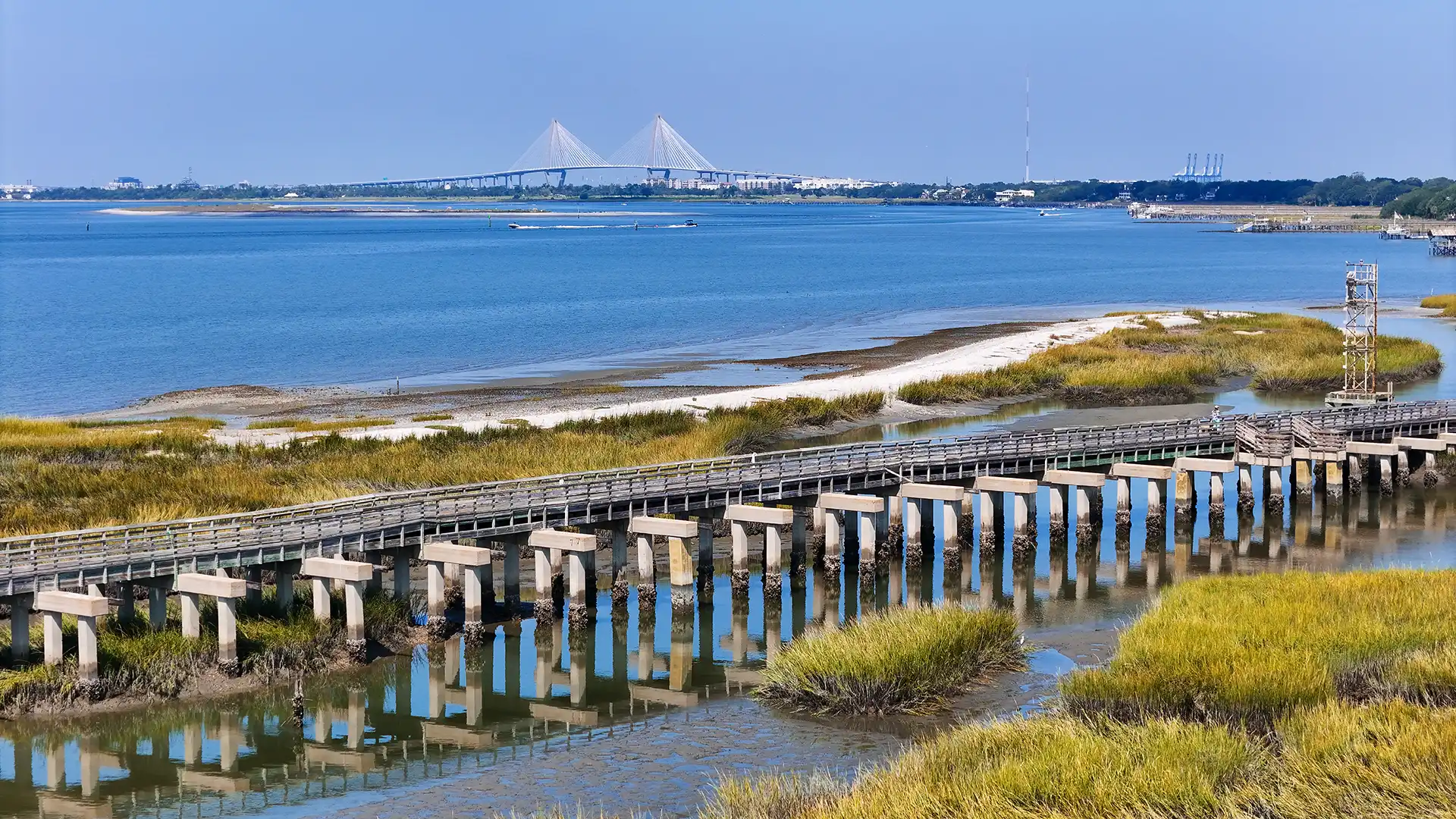
Right next to Patriots Point and the USS Yorktown, the Hog Island Trail offers a quiet nature escape just steps from one of Charleston’s busiest tourist draws. A short walk leads to an observation deck that looks out across marshland toward the Ravenel Bridge, making it a perfect add-on to a Yorktown visit. Keep your eyes peeled for fiddler crabs scuttling through the mudflats and ospreys circling overhead — proof that even near the city’s landmarks, nature is never far away.
White Point Garden at The Battery (Charleston Peninsula)
At the southern tip of Charleston’s peninsula, White Point Garden blends history and scenery. Stroll under ancient oak trees while statues and cannons recall Charleston’s role in past wars. From the seawall, you’ll have sweeping views of Charleston Harbor, with Fort Sumter in the distance. This is the city’s most famous park, but it still feels peaceful in the early morning or at sunset when the light hits the water just right.
Brittlebank Park (Charleston Peninsula)
Bordering the Ashley River, Brittlebank Park is a local favorite for fishing, jogging, or just relaxing on the grass. It’s right next to Joseph P. Riley Jr. Park, home of the Charleston RiverDogs (a Tampa Bay Rays affiliate) and The Citadel Bulldogs baseball team, so you can easily combine a ballgame with a riverside stroll. Each February, Brittlebank also hosts parts of the Southeastern Wildlife Exposition (SEWE), where falconry shows, dock dog competitions and conservation exhibits bring thousands to the waterfront.
Stono River County Park & West Ashley Greenway (West Ashley)
Out toward West Ashley, Stono River County Park offers a mile-long boardwalk trail that crosses a marsh and leads to a small island surrounded by tidal creeks. It’s a birdwatcher’s dream, with pelicans, wood storks, and even dolphins sometimes spotted from the boardwalk. Just minutes away, the West Ashley Greenway stretches nearly 8.5 miles along a former railway line, connecting neighborhoods to the marshes and wetlands. Popular with cyclists and runners, the trail gives you a quieter, less touristy slice of Charleston.
James Island County Park (James Island)
Spanning 643 acres, James Island County Park is one of Charleston’s largest and most versatile green spaces. Outdoor lovers can explore miles of paved trails, cast a line in the freshwater fishing lake, or rent kayaks and pedal boats for a paddle around. Families will appreciate the climbing wall and seasonal water park, while campers can take advantage of RV and tent sites shaded by pines. In December, the park transforms into the Holiday Festival of Lights, one of the region’s most beloved seasonal traditions, drawing visitors with dazzling light displays that stretch for miles.
3) Book a Fishing Charter
Charleston has earned its reputation as one of the Southeast’s premier fishing destinations. From shallow marshes teeming with redfish to offshore waters packed with mahi and snapper, the city offers anglers an incredible variety of experiences. Whether you’re a first-timer looking for a fun day on the water or a seasoned pro chasing a trophy catch, booking a charter here is an unforgettable way to explore the Lowcountry.
Inshore Fishing for Redfish
Charleston’s inshore fishery is legendary, largely thanks to strict slot limits and strong conservation efforts that keep populations healthy. The result? Not just plenty of fish, but true trophies. Anglers can target bull redfish year-round, with the the waters really coming alive in October and November. You can target slot reds in the marshes and mudflats while the large bulls live out in the open harbor around structure and the jetties. Light tackle and fly fishing are both great options for slot reds, but make sure you have some sturdy tackle if you’re going to be targeting the large 30”+ reds in the harbor. Alongside redfish, you’ll also find speckled trout, flounder, and sheepshead waiting to strike.
Offshore Adventures
If you’re willing to head farther out, Charleston’s offshore grounds open up a whole new world of fishing. The South Carolina Governor’s Cup Billfish Series has cemented the city’s reputation among serious offshore anglers, and for good reason. Running 30 to 60 miles into the Atlantic puts you on reefs and in the Gulf Stream, where you can hook into mahi mahi, grouper, snapper, king mackerel, wahoo, and even sailfish or marlin during peak season. These trips require a longer ride but reward you with some of the most thrilling action the East Coast has to offer.
Why It’s Worth It
Booking a charter here isn’t just about the fish but about the whole experience. You’ll spend your day navigating winding tidal creeks, watching dolphins surface alongside the boat, or racing out past the jetties toward bluewater. Charleston’s guides know these waters inside and out, and they’ll tailor the trip to your experience level, making it easy for anyone to get hooked on the city’s fishing culture.
4) Experience Charleston from the Water: Harbor Tours and Cruises
Charleston’s beauty shines brightest from the water. The harbor has always been at the heart of the city’s history, and today it doubles as a natural playground where you can spot dolphins, enjoy a sunset dinner, or even dance the night away. Booking a harbor tour or cruise is one of the most relaxing or lively ways to experience the city.
Classic Harbor Tours
Standard harbor cruises are perfect if you want a blend of history and scenery. As you glide across Charleston Harbor, you’ll pass landmarks like Fort Sumter, the Battery, and the Ravenel Bridge, all while guides share stories about the city’s past. These tours typically run a couple of hours and give you a broad perspective of how much of Charleston’s identity is tied to its waterways.
Dolphin Watching Excursions
One of the most popular options, especially for families, are dolphin tours. The harbor and surrounding creeks are home to pods of bottlenose dolphins that often swim alongside boats, sometimes close enough to see them playing or hunting fish together. It’s a chance to connect with Charleston’s natural side, and kids especially love the thrill of spotting dolphins in the wild.
Dining Cruises
For something more relaxed and romantic, dinner and sunset cruises offer Lowcountry cuisine served against a backdrop of the setting sun. Watching the sky glow over the harbor while enjoying fresh seafood and Southern dishes is an unforgettable way to cap off a day of sightseeing. These cruises often feature live music, making the atmosphere as memorable as the view.
Party Barges and Private Charters
If your idea of fun leans more toward celebration, Charleston also offers party barges and private charter cruises. These floating venues are popular with bachelor and bachelorette groups, but they’re also great for birthdays or just a night out with friends. With music, drinks, and the harbor as your backdrop, it’s a lively way to experience Charleston’s social side.
5) Stroll Along Rainbow Row and King Street
Pastel facades, lively storefronts, and a steady buzz of activity give Charleston’s streets their unique character. Two of the city’s most famous walks — Rainbow Row and King Street — showcase that charm in very different ways.
Rainbow Row
Along East Bay Street, a series of 13 brightly painted homes known as Rainbow Row has become one of Charleston’s most iconic sights. Built in the 1700s as merchants’ houses, they fell into decline after the Civil War before being restored and painted in the cheerful pastels that make them so photogenic today. Walk the block in the early morning for soft golden light, or linger in the afternoon when the colors really pop. Beyond being a postcard-perfect backdrop, Rainbow Row tells a story of preservation and the city’s pride in keeping history alive.
King Street
A few blocks inland, King Street offers a completely different vibe. The southern stretch near Broad Street is Charleston’s premier shopping corridor, lined with luxury names like Rolex, Apple, and Lululemon, along with stylish outfitters like Tecovas and Grady Ervin & Co. Strolling north, the energy shifts. Around Marion Square, the boutiques give way to bars, restaurants, and music venues, making this one of the city’s best spots for nightlife. Whether you’re browsing antiques, people-watching from a café, or bar-hopping after dark, King Street is where Charleston’s historic elegance meets its modern energy.
6) Take a Classic Carriage Ride Through Historic Charleston
There’s something timeless about hearing the steady clip-clop of hooves echoing through Charleston’s cobblestone streets. Horse-drawn carriage rides have been a city tradition for generations, and today they remain one of the most memorable ways to explore the historic district.
Seated in an open-air carriage, you’ll roll past pastel townhouses, wrought-iron gates, and leafy courtyards while licensed guides bring the city’s stories to life. From colonial beginnings to Civil War drama and Gilded Age elegance, the ride connects Charleston’s architecture and landmarks to the people who shaped them.
Each tour follows one of several approved routes, which means no two experiences are exactly alike — one ride might carry you past Rainbow Row and the Battery, while another winds by hidden gardens or stately churches. The pace is unhurried, giving you a chance to take in details you’d easily miss on foot.
Carriage rides are especially popular in the cooler morning and evening hours, when the light softens and the streets feel most atmospheric. For couples, it’s one of the most romantic ways to see the city; for families, it’s both entertaining and educational. Either way, it’s a Charleston classic that turns sightseeing into an experience you’ll remember long after the wheels stop rolling.
7) Walk or Bike Across the Arthur J. Ravenel Jr. Bridge
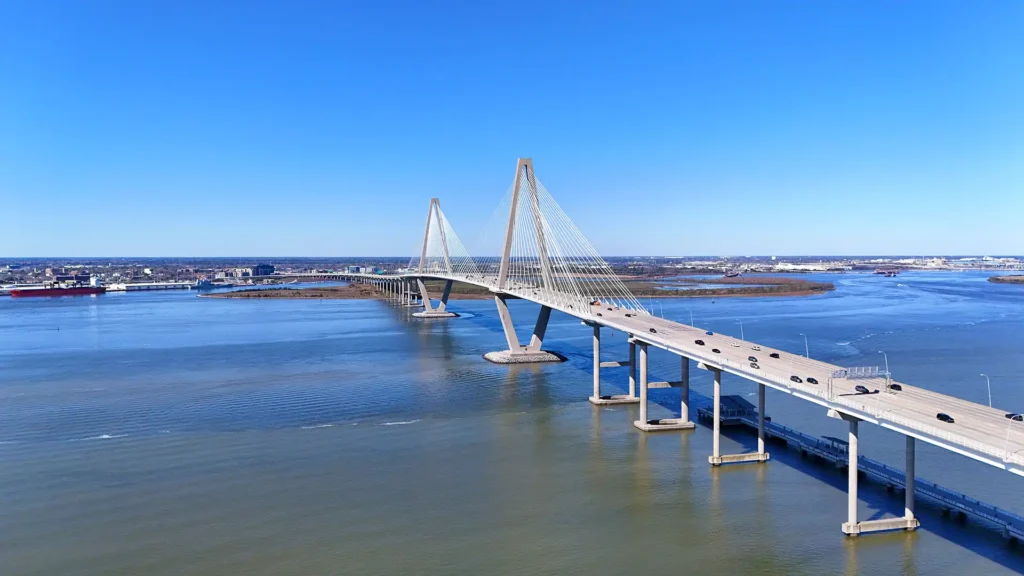
Rising gracefully across the Cooper River, the Arthur J. Ravenel Jr. Bridge isn’t just a feat of engineering, it’s one of Charleston’s most iconic landmarks. Whether you’re walking, jogging, or biking, the bridge offers some of the best views in the city and a chance to balance out all that indulgent Lowcountry dining with a little exercise.
Scenic Views with Every Step
The bridge stretches 2.5 miles each way, linking downtown Charleston to Mount Pleasant. Along the way, the dedicated pedestrian and bike lane gives you sweeping panoramas of Charleston Harbor, Sullivan’s Island, and the city skyline. Come at sunrise for glowing views over the Atlantic, or time it for sunset to watch the sky shift colors across the peninsula. If you’re lucky, you might even catch a massive container ship sliding underneath, a sight that never fails to impress.
Make It an Event: The Bridge Run
Every spring, tens of thousands of runners from around the world gather for the Cooper River Bridge Run, a 10K race that has become one of Charleston’s signature events. Beyond the competition, it’s a celebration of community and endurance, with locals lining the streets to cheer and the city buzzing with energy all weekend long.
Tips for Enjoying the Walk
If you’re walking the whole span, remember it’s five miles round trip. Bring water, wear comfortable shoes, and consider arranging a pickup on the Mount Pleasant side if you don’t want to double back. Cyclists can easily make the return ride, but many walkers prefer to savor the views one way before meeting friends or grabbing a rideshare.
8) Kayak and Paddleboard Charleston’s Scenic Waterways
If you want to experience Charleston from a different perspective, slip into a kayak or stand-up paddleboard and head for the water. The Lowcountry’s creeks, marshes, and tidal rivers are as much a part of the city’s character as its cobblestone streets, and paddling them puts you right in the middle of the action — dolphins surfacing nearby, pelicans gliding overhead, and the smell of salt marsh drifting on the breeze.
Shem Creek: Wildlife Meets Waterfront Dining
Just across the Ravenel Bridge in Mount Pleasant, Shem Creek is one of the most popular launch spots for paddlers. The narrow waterway winds past shrimp boats, waterfront restaurants, and out into open marshes where you’ll likely spot dolphins hunting schools of fish. It’s the kind of place where you can spend the morning on the water and then pull up to a dockside restaurant for fresh seafood afterward. Sunset paddles here are especially memorable, with the sky reflecting off the creek as the city lights begin to glow.
Folly Beach: Surf and Salt Marsh
On the opposite side of town, Folly Beach offers a mix of calm backwaters and surfside adventure. The marshes behind Folly are perfect for kayaking or paddleboarding at an easy pace, while the beachfront draws more adventurous paddlers looking to catch small waves. It’s also a great area for eco-tours, with guides pointing out oysters, shorebirds, and the delicate balance of the tidal ecosystem. Whether you’re gliding through a maze of spartina grass or floating just offshore with the pier in view, Folly delivers that laid-back beach-town vibe with a dose of natural beauty.
Why Paddling Belongs on Your List
Kayaking and paddleboarding are among the best ways to experience Charleston’s waterways up close. Outfitters throughout the area offer rentals and guided tours, so even first-timers can get on the water safely.
9) Soak Up the Sun at Charleston’s Beaches
The Charleston area is blessed with barrier islands that each offer a completely different beach experience. Within a short drive of downtown, you can go from the polished charm of Isle of Palms to the wild dunes of Sullivan’s Island, or the surf breaks and eclectic vibe of Folly Beach. Some stretches feel refined and manicured, others more rustic and natural, but all share the same Lowcountry backdrop of warm Atlantic water, salty breezes, and endless horizon. Whether you’re chasing waves, looking for family-friendly sand, or just want a quiet place to stretch out under the sun, Charleston’s beaches deliver.
Isle of Palms
Often considered one of the best beaches on the Carolina coast, Isle of Palms delivers a clean, wide shoreline and a relaxed, upscale atmosphere. The community’s investment in keeping the beach pristine shows, the sand is tidy, the facilities are well-maintained, and the vibe is welcoming for families. Beyond the surf, you’ll find golf courses, tennis clubs, and restaurants with breezy decks that overlook the Atlantic, making Isle of Palms ideal for travelers who want a refined but still casual coastal escape.
Sullivan’s Island
Just south of Isle of Palms, Sullivan’s Island feels a little more natural and understated. Here, broad dunes separate the homes from the beach, so once you step onto the sand, it feels like you’ve left the neighborhoods behind. The water is gentle, the beach uncrowded, and the atmosphere family-friendly. At the southern tip, history and scenery meet at Fort Moultrie, where you can explore the fort before heading out for an evening stroll along the shoreline. Sullivan’s is perfect for those who want peace, quiet, and a sense of connection to the natural barrier island setting.
Folly Beach
For energy and surf culture, head to Folly Beach. Known as the “Edge of America,” it’s Charleston’s most eclectic beach town, with surf shops, beach bars, and a lively vibe that attracts a younger crowd. The waves here make it the go-to spot for surfers, and several local professionals offer lessons for beginners. Folly’s beach is wide at low tide but narrows considerably when the tide comes in, sometimes disappearing in certain stretches, so timing your visit matters. For many, that just adds to its character. Spend the morning in the surf, grab fish tacos on Center Street, and end the day watching the sun dip behind the Folly Beach Pier.
10) Tee Off on Charleston’s World-Class Golf Courses
Golfers will find plenty to love in Charleston, where coastal breezes, marsh views, and championship courses combine to create one of the South’s premier golf destinations. With dozens of courses scattered across the Lowcountry, you can play everything from relaxed municipal tracks to PGA-level venues that test even the best players.
The Links Course at Wild Dunes (Isle of Palms)
On Isle of Palms, The Links Course at Wild Dunes Resort was the first design by Tom Fazio and remains one of his classics. The course winds through dunes and marsh before finishing with a dramatic oceanfront hole. Its combination of beauty and shot-making demands makes it one of the most memorable rounds you can play in the Charleston area.
Charleston National Golf Club
Tucked into the marshes of Mount Pleasant, Charleston National offers a true Lowcountry golf experience. Designed by Rees Jones, the course features wide fairways, strategic bunkering, and natural wetlands that come into play throughout the round. Affordable compared to some of the resort courses, Charleston National is known for delivering championship-level golf without the resort-level price tag.
The Ocean Course at Kiawah Island
An hour outside downtown Charleston lies one of the most famous golf courses in the world: The Ocean Course at Kiawah Island Golf Resort. Designed by Pete Dye and host of multiple major championships including the 1991 Ryder Cup and multiple PGA tour events, it’s a bucket-list course for serious golfers. With nearly every hole offering Atlantic views and winds that can change the course’s personality by the hour, it’s one of the most challenging and rewarding rounds you’ll ever play.
Planning Your Charleston Adventure
Charleston offers a little bit of everything: history, outdoor adventure, beaches, shopping, and great food. These ten activities give you a well-rounded look at what makes the city so special, whether you want to dive into the past, get out on the water, or just enjoy a relaxed day by the coast. However you plan your trip, you’ll find plenty of ways to make the most of your time in the Holy City.